27th April 2023
It was a most uncomfortable night for Sue, who woke in the early hours feeling hot and unwell. She chose to sleep on the cooler floor beside the bed, outside the protection of the mosquito net. Predictably, the mozzies took full advantage of the opportunity and feasted on her exposed legs. However, by the time a fierce thunderstorm struck around 4 a.m., she had returned to bed, feeling much better.
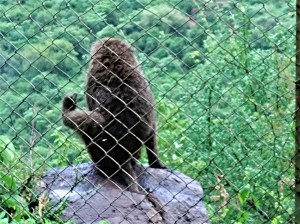
For two hours, we listened to the rolling crashes of thunder overhead before deciding to shower and head out for an early breakfast. As I waited for Sue to finish in the bathroom, I filmed a lone baboon sitting nonchalantly just a few metres from our balcony, watching smoke curl up from several chimney fires in the forest below. The locals were starting breakfast in their homes, hidden beneath the trees. After a few moments of quiet contemplation, the baboon slowly ambled away.

 After breakfast, the group reconvened, and we were on the road by 8 a.m. The drive to visit the Konso people took just over an hour. Their lands have been designated a World Heritage Site due to the unique way they cultivate subsistence crops on terraced hillsides. En route, we stopped at the local tourism office in the township to collect a guide, then continued to one of the preserved villages higher up in the mountains.
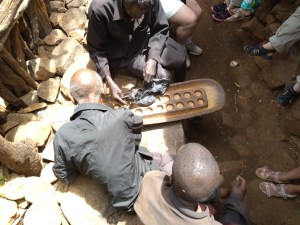
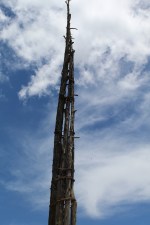
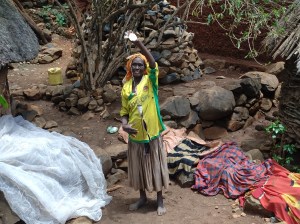
The Konso erect totems in honour of their dead and also to mark every 18 years that a village has existed. We walked in single file, crocodile fashion, along narrow, stone-walled alleyways that wound between compounds housing their distinctive thatch-roofed dwellings. It was a bustling village, and locals frequently had to squeeze past us as they went about their daily routines. At one point, we carefully stepped around a group of elderly men engrossed in a curious board game involving small coloured balls. Wide-eyed and smiling, curious children would follow us for a while, until they strayed too far from their compounds and hurried back.
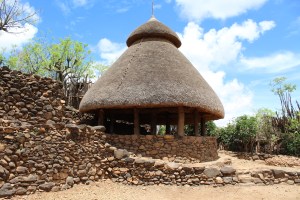

We came across two of their totems set in the centre of a wide terrace, along with the accompanying 50-kilo stones that village youths are required to lift and hurl over their shoulders to prove they are of marrying age.
After much stumbling along the rock-strewn paths and plenty of smiles and cheerful ‘hellos’ from the villagers, we eventually exhausted our camera batteries and made our way back to the bus. A mile or so down the mountain, we stopped for a delightful lunch just outside the town, where we were treated to wonderful views over the valley below.

The afternoon involved a very long drive to our accommodation for the night in the Omo Valley, and it wasn’t without incident. The first part of the journey was along reasonably well-surfaced roads, but after some 20 kilometres, the tarmac gave way to a bone-shaking track of gravel and compacted soil. To make matters worse, as we entered the mountains, the heavens opened, and we were caught in yet another tremendous storm, which at times transformed the road into a river.
We passed houses set in fields on either side of the track, where we could see people sitting in several inches of floodwater inside their mud and thatch huts. Their animals looked equally miserable, huddling beneath sparse bushes in a futile attempt to find shelter. I felt so sorry for them, but I suppose this must be a regular occurrence, and they are resigned to their fate.
Many miles later, while speeding along a puddle-pocked, muddy track, we accidentally drenched a man standing by the roadside. Our driver stopped to apologise, but this only escalated the situation. The man, apparently a drunken community policeman, refused both our apology and any offer of compensation, preferring instead to rant at length. A small crowd gathered to see what the fuss was about. Though the mood never turned threatening, after 15 minutes of fruitless gesturing and complaints, we eventually gave up and drove on.
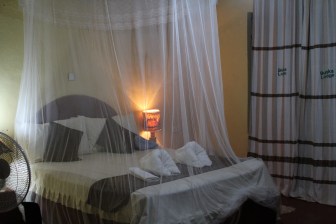

We arrived at our accommodation, the Buska Lodge, just as the sun was setting. Its online description sums it up rather well: Situated in the heart of Southern Ethiopia in the Omo Valley, Buska Lodge is an unpretentious eco-lodge offering travellers the best accommodation and meal service in this region. We checked in and enjoyed a decent evening meal before retiring to our lodges, with the power switched off promptly at 10.30 p.m.
28th April 2023
After a very comfortable night’s sleep beneath an exceptionally effective mosquito net, we woke to the sound of an unfamiliar bird’s song. We lingered in bed for a while, savouring the distinctive morning sounds of Africa, until the need to shower and dress eventually took precedence.
For breakfast, we both opted for an omelette and a strong coffee, just the thing to recharge our batteries ahead of what promised to be another long and active day.
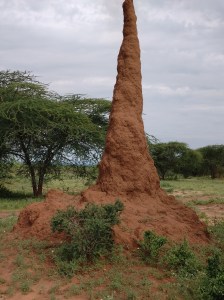
The group set off shortly after 8 a.m., settling in for the 75 km drive to Omorate to visit the Daasanach tribe. The journey initially went smoothly along good-quality roads, and we made excellent time, even with a brief stop to photograph a couple of impressive termite mounds, their towering chimneys reaching at least six metres.
Then, quite suddenly, we came to a halt. Our guide and driver began questioning the Ethiopian driver of a pick-up parked at the roadside. It soon emerged that we had just driven 75 km in the wrong direction. It was a rather embarrassing moment for both of them, but our group, while naturally disappointed, remained pragmatic. After all, this is Africa, where you learn to expect the unexpected and adjust your plans accordingly.
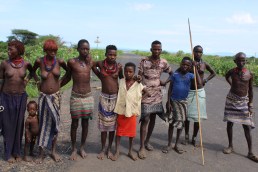
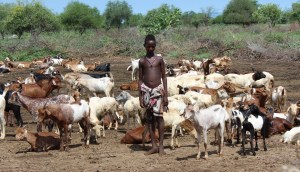
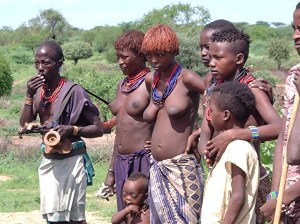
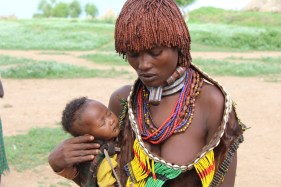
On the return journey to Buska Lodge, we stopped again, this time to photograph a large flock of goats crossing the road. As is often the case, the scene had not gone unnoticed by nearby locals, and we soon had company. Fortunately, they were members of the Daasanach tribe, easily identifiable by their distinctive hair colouring, achieved using a mixture of butter and natural red soil, and by their skimpy, brightly coloured clothing.
The first to appear was a small family group, soon joined by extended family members. Taking photographs of locals typically involves some form of payment, and in this instance, we offered chocolate bars and a small sum of money. I was rather bemused when one of the family members refused the banknotes offered, claiming they were too dirty. Our guide had to rummage around for some newer ones before they were accepted. I couldn’t help but wonder whether, fresh from the pandemic, he understood that currency can carry viruses such as Covid, and whether that was the true reason for his refusal.
 We continued on our way and arrived back at the lodge about half an hour before lunch. As it was an eco-establishment, there was no electricity during the day, so our unexpected return meant the staff had to act quickly, but this is Africa, and they promptly set about providing adequate sustenance for our party of eleven.
Afterwards, we relaxed in our powerless lodges until 3 p.m., when we regrouped for an afternoon excursion to visit another of the region’s native tribes.
The short drive to see the Hamer tribe took place under the looming threat of a storm. Thankfully, apart from a noticeable rise in humidity, the clouds chose to remain on the horizon, saving their downpour for another part of the Omo Valley.

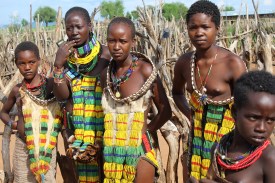 The Hamer tribes are pastoralists who place great importance on their cattle, though they also keep flocks of goats to supplement their diet. The village we visited was typical in layout, consisting of circular thatched huts with walls made from sticks, the gaps notably left unfilled by daubed mud, presumably to allow for the passage of cooling air, which is essential in this hot region of the country.
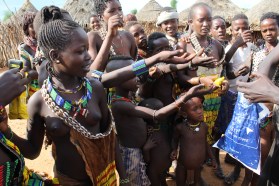

Men of the Hamer tribe may take up to four wives. The first is chosen for them by their father, while subsequent wives are selected by the husband himself. It is not uncommon for the third and fourth wives to be taken by force, effectively kidnapped, to help with cooking and agricultural duties.
Marriage is preceded by specific rituals. For men, a bull-jumping ceremony serves as a test of masculinity and a rite of passage. For women, there is a whipping ritual, carried out by the bride’s mother. We were shown one young girl whose back bore terrible scars, a stark reminder of the whipping she had endured.
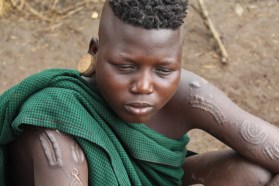
 It sounds and looks brutal by our standards, but it is important to recognise that this is a vastly different culture, and such practices are part of their long-standing traditions. We may find them disturbing, but it is not our place to judge.
As a group, we wandered through the village, taking numerous photographs of the welcoming tribespeople, men, women, and children alike. They seemed genuinely pleased to see us and were more than happy to pose patiently for the camera.
Naturally, we were also shown their only source of water, located just a short walk beyond the village. We had been advised to cover up to protect ourselves from biting flies, and those of us who did were grateful for the warning as we approached the muddy pond, shared by both the villagers and their animals.

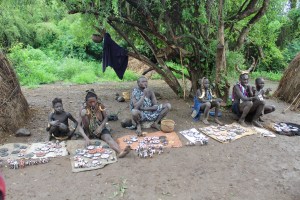
The villagers were friendly, though previous encounters with tourists had made them more worldly, and some were quite persistent in trying to beg for anything they could spot that we were carrying or wearing. They had a little success with a few members of our party.
As we made our way back through the village, we took more photographs while our guide handed over the ‘camera fees’ collected earlier; these were to be paid to the village headman. Afterwards, we boarded the bus and returned the short distance to Buska Lodge.
For once, there was time to relax in our lodges before enjoying our evening meal and settling down for the night.


Leave a comment